The urban scene on the campus is formed by a diverse array of elements. Organizing these elements and understanding their relationships contribute to creating an urban structure that meets individuals’ needs. This study aims to present a practical methodology for identifying and revealing influential architectural details, focusing on the case of Mosul University. An interactive virtual environment was tested through a 360-degree video presentation of the case study, employing the Gazerecorder computer program with a group of students and professors from Mosul University, thus conducting in-depth interviews to identify the multiple architectural elements that contribute to shaping the architectural identity of the campus. These elements include built features such as details in facades, floors, and ceilings, as well as nonbuilt elements such as furniture, activities, and green spaces. These elements interact with various characteristics and relationships that contribute to creating a comprehensive image of the urban environment, with variations in impact and influence depending on the architectural context and geographical location of each element.
https://iieta.org/journals/ijsdp/paper/10.18280/ijsdp.190705
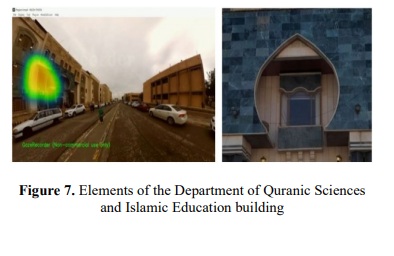
The urban scene consists of elements interconnected through relationships, distinguished by various characteristics such as color, size, texture, and ornamentation. These elements can be either structural or non-structural. Structural elements include details of facades, exterior floors, and urban roofs, while non-structural elements encompass urban furniture and activities in urban spaces. This research achieved promising results regarding architectural details and their impact on the urban scene using 360-degree video technology, which was not previously utilized in studies on urban memory. The use of 360-degree video technology facilitated the involvement of a larger sample size and obtaining more precise results through the use of eye-tracking software like Gazerecorder, which highlighted elements not mentioned by participants during interviews. The research results are significant in enhancing the urban environment of the campus by emphasizing both structural and non-structural details and their impact, such as color, size, texture, materials, uniqueness, and continuity. Future research could utilize panoramic viewers and advanced computer programs in the eye-tracking process.